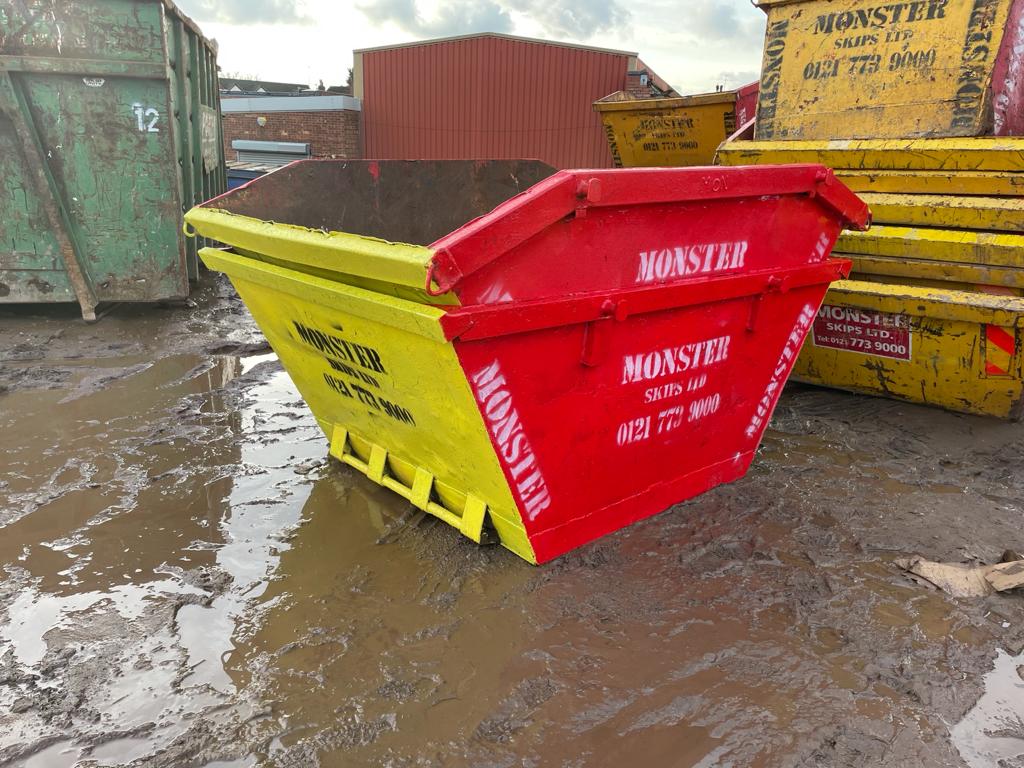
What Can’t You Put in a Skip? A Complete Guide
Knowing what can’t go in a skip is essential for safety, legal compliance, and environmental protection. While skip hire is one of the most convenient ways to dispose of large volumes of waste, there are strict rules in place that limit what items can be placed inside. Ignoring these restrictions can lead to fines, delayed collections, or serious risks to people, property, and the environment.
This guide explains which items are prohibited from skips in the UK, why they are restricted, and how to dispose of them safely and legally.
Why Certain Items Are Banned from Skips
Some waste types cannot be disposed of through general skip hire due to the risks they pose. Skip hire companies are legally responsible for the waste they collect, so strict regulations must be followed.
Common reasons items are restricted include:
Health and safety risks
Hazardous materials such as asbestos, chemicals, and pressurised containers can cause injury or illness if mishandled.
Environmental hazards
Certain items can leak toxic substances, contaminate soil and water, or release harmful gases when compacted or landfilled.
Legal compliance
UK waste regulations control how specific materials must be treated, transported, and recycled. Non-compliance can result in fines or prosecution.
If you are ever unsure whether an item is allowed, it is always best to check with your skip hire provider before placing it in the skip.
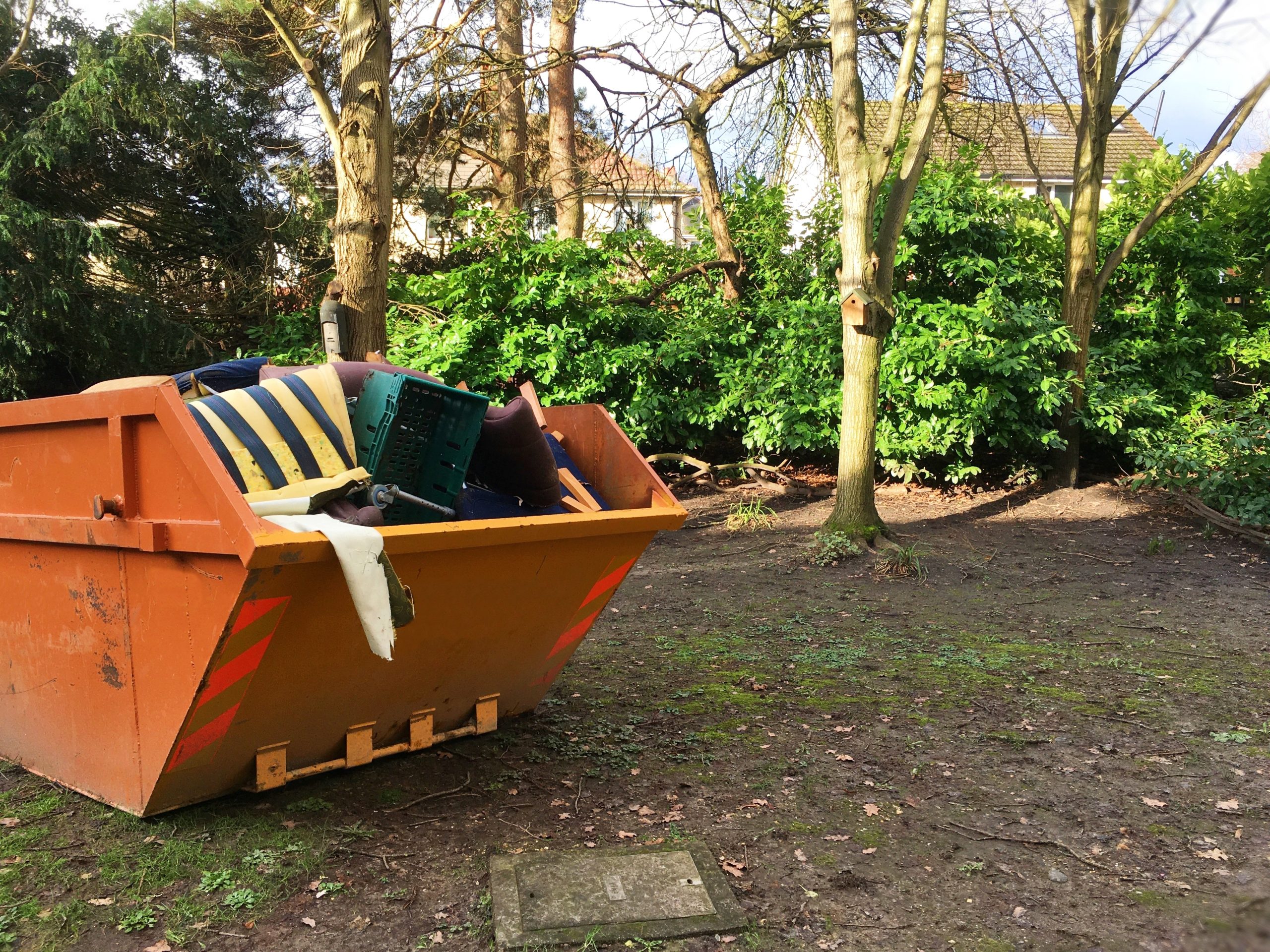
Prohibited Items You Can’t Put in a Skip
Below are the most common items that are not allowed in standard skip hire, along with guidance on safe disposal.
Paint, Fuel, and Solvents
Liquid paint, oils, fuel, and chemical solvents are flammable and toxic.
Empty paint tins that are completely dry may be accepted, but liquid paint or fuel is not permitted.
These materials are banned due to fire risks, toxic fumes, and groundwater pollution.
They should be disposed of at local council hazardous waste facilities or licensed recycling centres.
Mattresses
Mattresses are bulky and difficult to process due to the combination of fabric, foam, and metal springs.
They are restricted because they are hard to recycle and can contaminate other waste.
Mattresses should be disposed of through council bulky waste collections or specialist mattress recycling schemes.
Plasterboard and Gypsum Waste
Plasterboard contains gypsum, which releases hydrogen sulphide gas when mixed with biodegradable waste in landfill conditions.
This gas is harmful and dangerous, which is why plasterboard is not allowed in general skips.
It must be disposed of through specialist plasterboard or gypsum recycling facilities.
Tyres
Tyres are non-biodegradable and pose a significant fire risk if stored or compacted.
They are banned from skips due to environmental regulations and safety concerns.
Tyres should be taken to tyre fitters, garages, or licensed tyre recycling centres.
Fluorescent Tubes and Light Bulbs
Fluorescent bulbs contain mercury, which is extremely harmful to human health and wildlife.
If broken or crushed, mercury can be released into the environment.
These bulbs must be disposed of at council recycling points with dedicated mercury or lighting waste containers.
Batteries
All batteries, including household batteries, lithium-ion batteries, and car batteries, are prohibited.
They contain toxic chemicals that can leak or ignite, creating fire and pollution risks.
Batteries should be taken to supermarket battery collection points, recycling centres, or specialist disposal facilities.
WEEE Waste (Electrical and Electronic Equipment)
WEEE waste includes items such as televisions, fridges, freezers, washing machines, cookers, computers, and printers.
These items contain hazardous components such as refrigerant gases, heavy metals, and pressurised parts.
Electrical waste must be taken to WEEE recycling centres or returned through retailer take-back schemes.
Medical and Clinical Waste
Medical waste includes syringes, sharps, dressings, and expired medication.
These items are banned due to infection risks and strict legal controls.
Medical waste should be disposed of through NHS-approved or council-authorised medical waste services.
Asbestos
Asbestos is extremely dangerous and heavily regulated under UK law.
Exposure to asbestos fibres can cause serious long-term health conditions.
Asbestos must never be placed in a standard skip and can only be handled by licensed asbestos removal contractors.
Gas Cylinders
Gas cylinders remain pressurised even when they appear empty.
They are banned because they can explode when crushed or compacted.
Gas bottles should be returned through refill schemes or disposed of at council-approved drop-off points.
What Can You Put in a Skip?
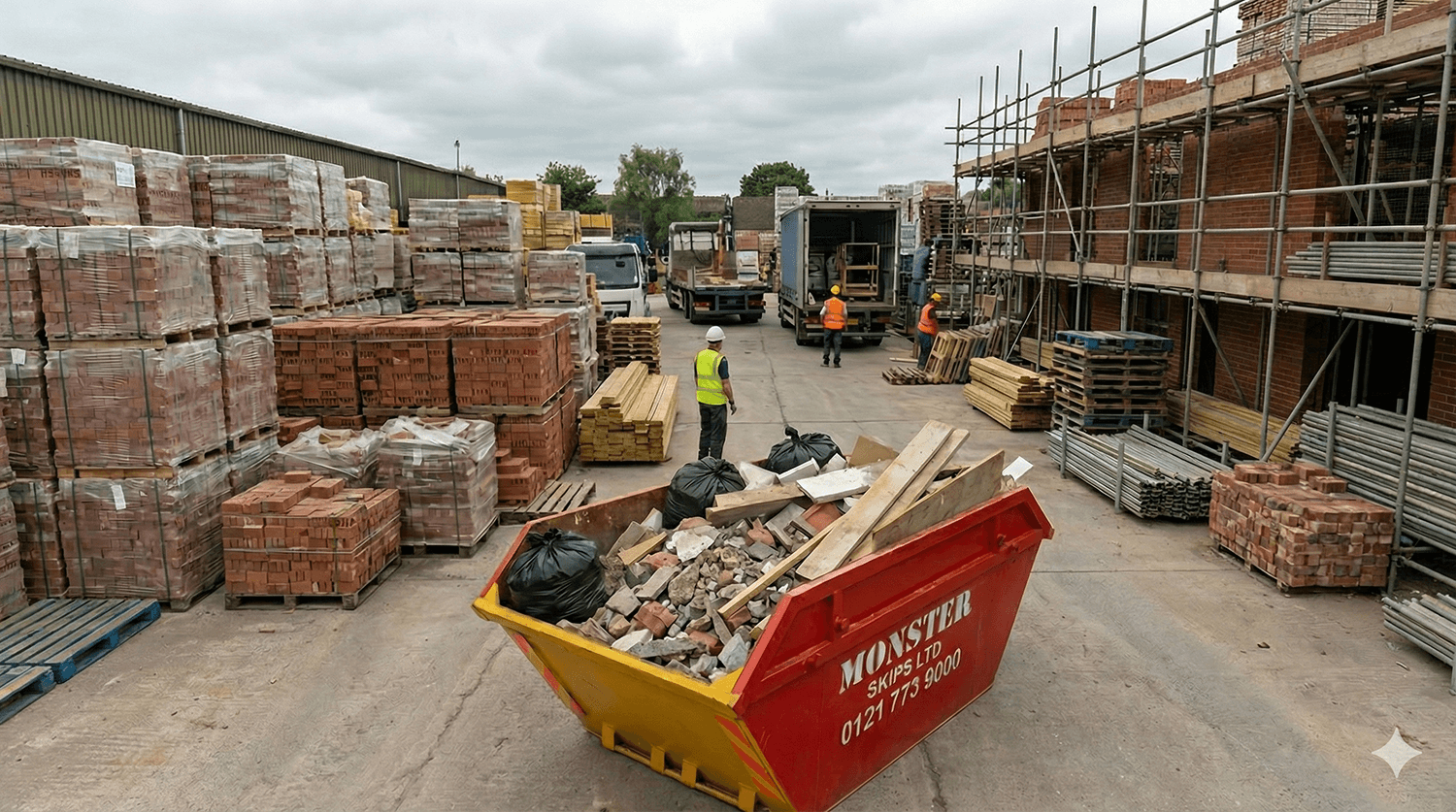
Most non-hazardous waste is suitable for skip hire, including:
- Wood and timber
- Furniture
- Paper and cardboard
- Bricks and concrete
- Rubble and stones
- Metals
- Tiles and ceramics
- Pottery and clay
- Clothing and textiles
- Garden waste
- Soil, within weight limits
- General household rubbish
Where possible, recyclable materials such as metal and cardboard should be separated to support environmentally responsible disposal.
Why Using a Professional Skip Hire Company Matters
Choosing a licensed provider like Monster Skips Ltd ensures your waste is managed safely and legally.
Professional skip hire helps ensure compliance with UK waste regulations, reduces the risk of fines, and supports responsible recycling practices.
If your project involves hazardous, electrical, or restricted waste, Monster Skips can advise on separate collections or recommend approved recycling partners.
Final Thoughts
Understanding what can’t go in a skip is not just about following rules. It is about protecting people, the environment, and avoiding unnecessary costs or delays.
By knowing what is prohibited, you can ensure safer waste handling, legal compliance, and more efficient skip collections.
Monster Skips Ltd supports responsible waste disposal across Solihull, Shirley, and the wider West Midlands. Our team is always available to help you choose the right skip and manage your waste correctly.
For expert advice and reliable skip hire, contact Monster Skips Ltd today.
FAQs
Can I mix hazardous and non-hazardous waste in a skip?
No. Hazardous and non-hazardous waste must always be kept separate. Mixing them is illegal and unsafe.
How do I dispose of small electrical items?
Small electrical items should be taken to a WEEE recycling centre or returned via retailer take-back schemes.
What should I do if I have already put a restricted item in my skip?
Contact Monster Skips immediately so safe removal can be arranged and penalties avoided.
Are there eco-friendly disposal options for restricted items?
Yes. Many councils and recycling centres recover materials from tyres, batteries, electronics, and lighting.
Can plasterboard ever go in a skip?
Only if it is separated and collected through a specialist plasterboard recycling service.
Will my local council help with disposal?
Most councils offer specialist collections for hazardous, medical, and electrical waste.
Why are skip hire rules so strict?
Skip hire companies are legally responsible for waste transport and disposal under UK law.